If you have ever searched “how to groom a Lagotto Romagnolo” and ended up more confused than when you started, you are not alone. The Lagotto coat is unlike anything most dog owners have dealt with before. It is dense, woolly, curly, and it does not shed the way other breeds do, which sounds like a dream until you realize that “no shedding” does not mean “no work.” It just means the work happens differently.
This guide covers everything you need to know to keep your Lagotto’s coat healthy, comfortable, and looking like the rustic Italian working dog it is supposed to look like, whether you are doing it yourself at home or preparing your dog for a professional appointment.
Understanding the Lagotto Coat Before You Touch It
The first thing to understand is that the Lagotto Romagnolo coat is not fur. It is hair, growing continuously the way human hair does, in tight, woolly curls that form a dense outer layer over a softer undercoat. Because it does not shed in cycles, dead hair stays trapped inside the curls instead of falling on your furniture. That is what makes the Lagotto hypoallergenic and low-shedding, but it is also what causes matting if the coat is neglected.
Puppies have a softer, fluffier version of the coat that transitions to the adult woolly texture somewhere between six months and a year and a half. This transition period is actually the most critical for grooming, because the two coat textures can mat together rapidly if you are not brushing regularly during this phase. Many new Lagotto owners are caught off guard by this.
The adult coat, once fully established, is more forgiving in some ways. It mats less aggressively than during the transition, but it still requires consistent attention.
How Often Should You Groom a Lagotto Romagnolo
For brushing at home, the honest answer is two to three times per week at minimum. If your Lagotto is in a longer coat, or if they spend a lot of time outdoors, swimming, or in grass and brush, you will need to brush more frequently. Debris, leaves, and moisture get trapped in the curls easily and can accelerate matting if left untouched.
For professional grooming or a full clip, most owners find that every eight to twelve weeks works well when maintaining a shorter, more practical coat. If you prefer a longer, more natural look, professional appointments every six to eight weeks are more realistic to prevent the coat from becoming unmanageable.
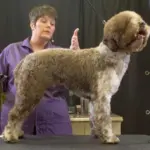
The Lagotto does not need to look like a show dog. In fact, the breed standard intentionally calls for a rustic, natural appearance. Do not feel pressured to achieve a perfectly uniform clip. Keeping the coat clean, mat-free, and at a comfortable length is the goal.
Tools You Actually Need
You do not need a professional grooming setup to maintain a Lagotto at home, but a few quality tools make a significant difference.
A slicker brush with fine, flexible pins is your primary tool for everyday brushing. It gets into the curls without damaging them and pulls out trapped debris effectively. Do not use a regular paddle brush or a bristle brush on a Lagotto coat. Neither will penetrate deeply enough to be useful.
A metal wide-tooth comb is essential for checking your work. After brushing, run the comb through the coat in sections. If it glides through without catching, you are mat-free. If it catches, you have more work to do with the slicker brush before you clip anything.
A detangling spray helps when you encounter small mats or tight areas. Spray lightly, work from the tips inward with your fingers, and then follow with the slicker brush. Never pull a mat from the root outward. That is painful for the dog and often makes the mat worse.
For clipping at home, a quality pair of professional-grade clippers with a number four or number five blade gives you a safe, comfortable length for most of the body. Scissors with rounded tips are useful for finishing around the face, ears, and paws.
Step-by-Step Home Grooming Routine
Start with a thorough brush-out before bathing. Water tightens the curls and makes mats significantly harder to remove. Brush the entire coat section by section, working from the legs upward and from the tail toward the head. Pay special attention to the areas behind the ears, under the armpits, around the collar line, and between the hind legs. These are the spots where mats form first and fastest.
Once the coat is fully brushed out and mat-free, you can bathe your Lagotto. Use a dog shampoo formulated for curly or woolly coats. Work the shampoo in gently and rinse thoroughly. Incomplete rinsing is one of the most common causes of skin irritation in Lagottos.
Dry the coat completely before clipping. A Lagotto clipped while damp will not clip evenly and is more prone to skin irritation from the blade. Use a low-heat dryer or let the coat air dry fully in a warm environment.
When clipping, follow the natural direction of the curl and work in smooth, consistent passes. Keep the blade moving and do not press too hard against the skin. For the face, clip carefully around the eyes to ensure clear visibility. The ears should be kept relatively short on the outside to allow air circulation, which helps prevent ear infections, a common issue in drop-eared breeds.
Finish by trimming the paw pads. Hair grows between the toes on a Lagotto and can cause slipping on smooth surfaces and trap debris. Use scissors or a small trimmer to clear the pads carefully.
The Ears, Eyes, Nails, and Teeth — The Details That Matter
Ear care is genuinely important for Lagottos. Their floppy ears trap moisture and limit airflow, which creates conditions where bacteria and yeast thrive. Check the ears weekly. They should be clean and odor-free. Use a veterinarian-recommended ear cleaning solution and a cotton ball, never a cotton swab. If you notice dark discharge, a strong odor, or your dog shaking their head frequently, that is a sign of infection and requires a vet visit.
Around the eyes, keep the hair trimmed short enough that it does not touch the eye surface. Long hair around the eyes causes irritation and can lead to tear staining over time. Some Lagottos have more prominent facial hair than others, so the frequency of this trim varies.
Nails should be trimmed every three to four weeks. If you can hear your dog clicking on the floor, the nails are too long. Long nails affect posture and can cause joint discomfort over time. If you are uncomfortable trimming nails yourself, this is an easy task to add to a professional grooming appointment.
Dental hygiene is overlooked by most dog owners but matters enormously for long-term health. Brushing your Lagotto’s teeth two or three times per week with a dog-specific toothpaste keeps tartar buildup under control and prevents the need for costly dental cleanings under anesthesia.
When to Call a Professional
Home grooming handles maintenance well, but a professional groomer who knows the Lagotto coat is worth finding and keeping. Twice a year, a professional can do a thorough dematting session, a structured clip, and address any areas that are difficult to manage at home. If you are unsure about a mat that feels tight and close to the skin, always defer to a professional rather than trying to force a clipper through it.
When choosing a groomer, specifically ask if they have experience with Lagottos or similar woolly breeds like the Portuguese Water Dog or the Barbet. A groomer unfamiliar with the coat type may clip the coat too short or too aggressively, removing the woolly texture that gives the Lagotto its characteristic look.
A Note on Grooming Frequency and Your Lagotto’s Comfort
Lagottos who are groomed consistently from puppyhood are significantly easier to work with as adults. If your dog was not introduced to grooming early, patience and positive reinforcement are your best tools. Keep early sessions short, reward generously, and build the experience as something your dog associates with calm attention and treats rather than restraint and discomfort.
A well-groomed Lagotto is a comfortable Lagotto. The coat is not purely aesthetic. An unmanaged coat becomes painful when mats tighten against the skin, restricts movement, traps heat, and creates conditions for skin issues. Regular grooming is one of the most direct ways you can take care of your dog’s physical wellbeing.
If you are considering a Lagotto and wondering whether the grooming commitment fits your lifestyle, our FAQ page has more information on what day-to-day ownership looks like. And if you are ready to meet a puppy that has already been introduced to grooming from their first weeks of life, [browse our available Lagotto Romagnolo puppies] to see who is currently looking for a home.